Customer Support Portal
Context
IBM operates through separate business areas, resulting in a fractured and siloed customer support experience that often leaves clients frustrated and confused when seeking product support. Clients are forced to navigate IBM’s multi-tiered structure, frequently being transferred between multiple support agents. Meanwhile, IBM’s support agents are eager to help but are hindered by the limitations of their tools and the system in place.
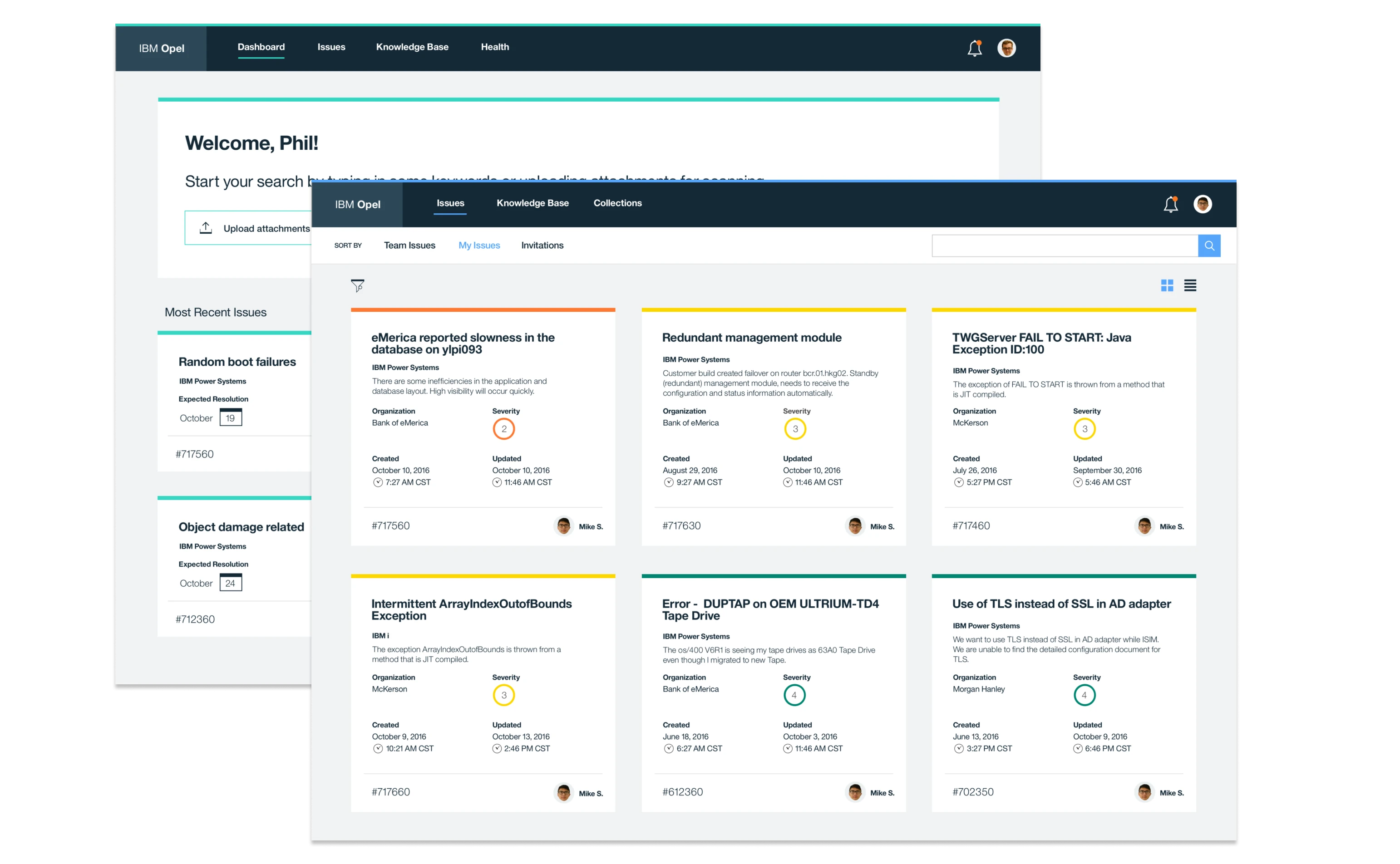
OPPORTUNITY
We saw an opportunity to build trust with IBM’s clients by delivering a seamless support experience throughout their journey. Our vision was for clients to view IBM as a unified company, rather than a collection of siloed business units, by providing consistent, meaningful support across all products and channels. We aimed to make customer support an integrated part of the product experience rather than an afterthought.
Research
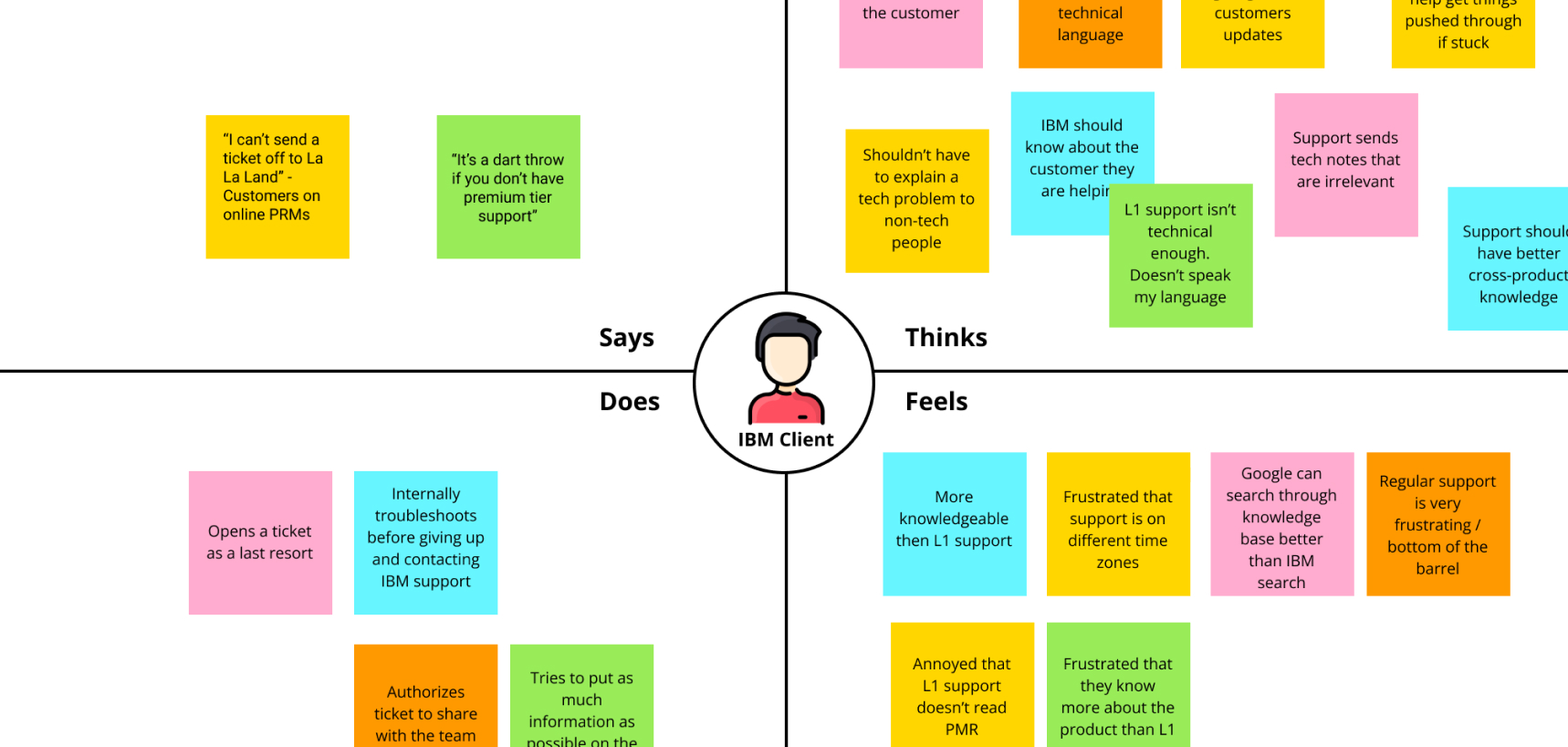
To address these issues, we interviewed multiple clients to understand their frustrations with the current support system. We also spoke with and shadowed our support engineers to learn about their workflow and pain points. This research allowed us to empathize with both clients and support engineers, gaining insight into what it’s like to navigate IBM’s support experience.
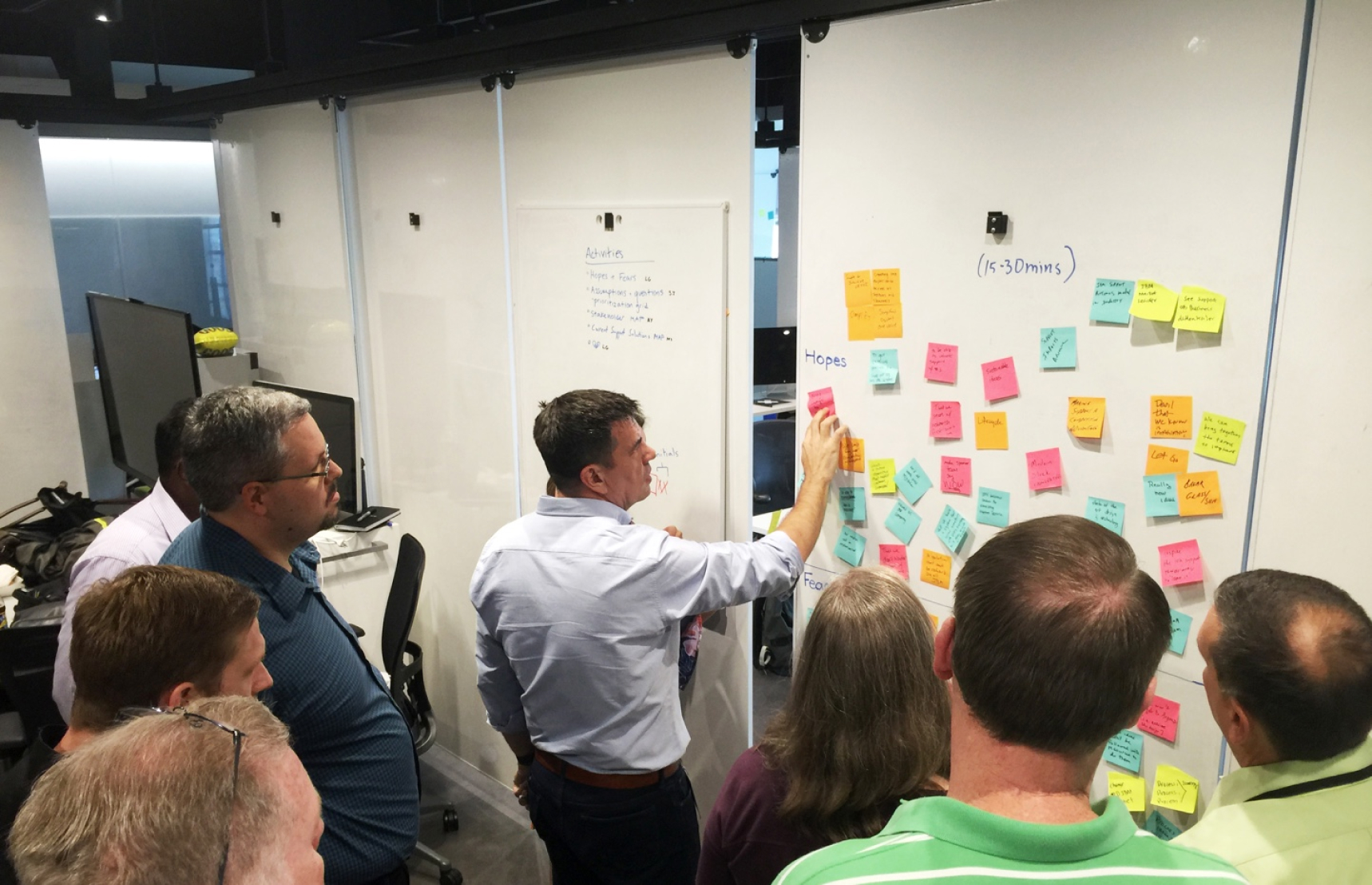
Information is lost in translation
As customers are transferred up the ladder to L2 or L3 support agents, they end up having to re-explain their situation over and over again. IBM’s tiered infrastructure is crippling our clients.
“A lot of times you have to explain who you are, what the deal was, [and that] we need a fix now.”
Customers are left in the dark
Multi-layered support leave customers unsure who is handling their problem, or if someone is even actively working on their ticket.
“I am pretty much at the mercy of the support engineers getting me to the right place.”
Knowledge bases are out-of-date
Documentation is poor, outdated and difficult to find. As a result, customers struggle to find answers on their own and call IBM support as a last resort.
“Both forums and online sources are too troublesome.”
IBMers are not set up for success
IBMers do not have the tools or infrastructure in place to work together effectively or collaborate on problems together.
“When we have a critical situation we really do swarm…We bring all the best of the right people.”
Solution
By identifying key insights from our research, we translated those insights into design decisions that addressed the biggest pain points for both clients and support engineers. We conceptualized solutions and continuously tested them with users, refining our designs to get closer to solving their problems.
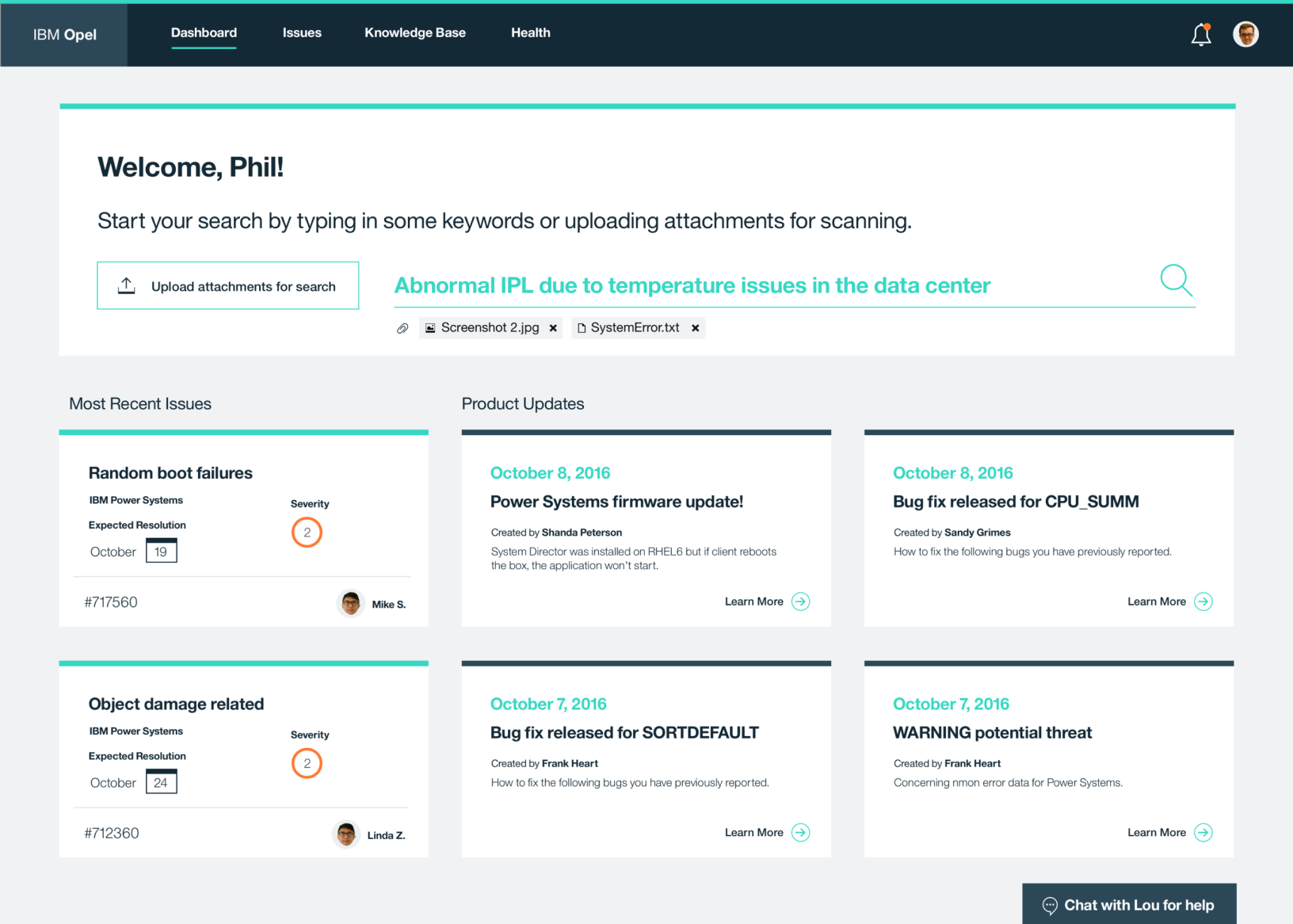
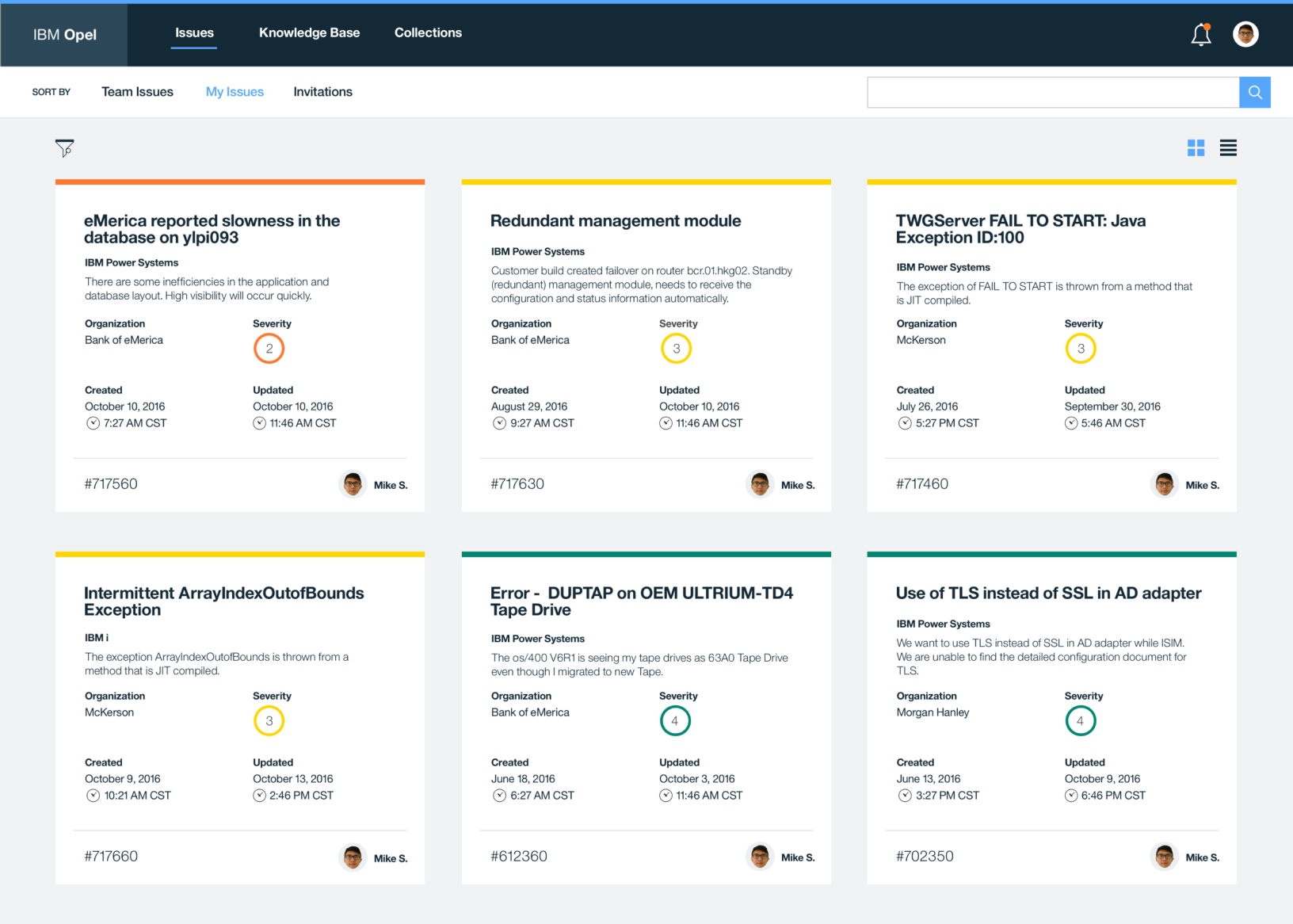
Our solution was a one-stop shop for both clients and support engineers—a single, unified system that integrated all of IBM’s support into a seamless experience.
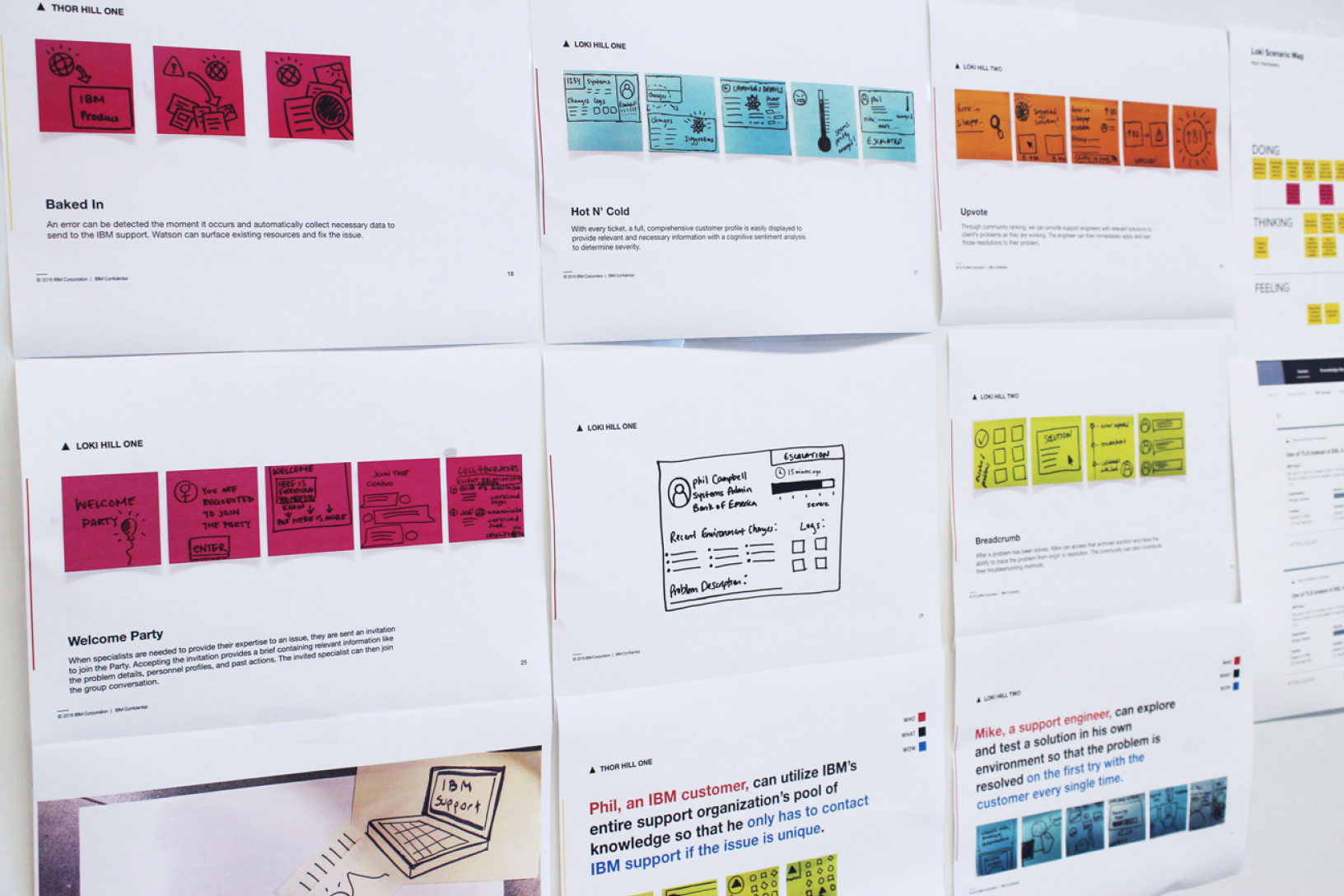
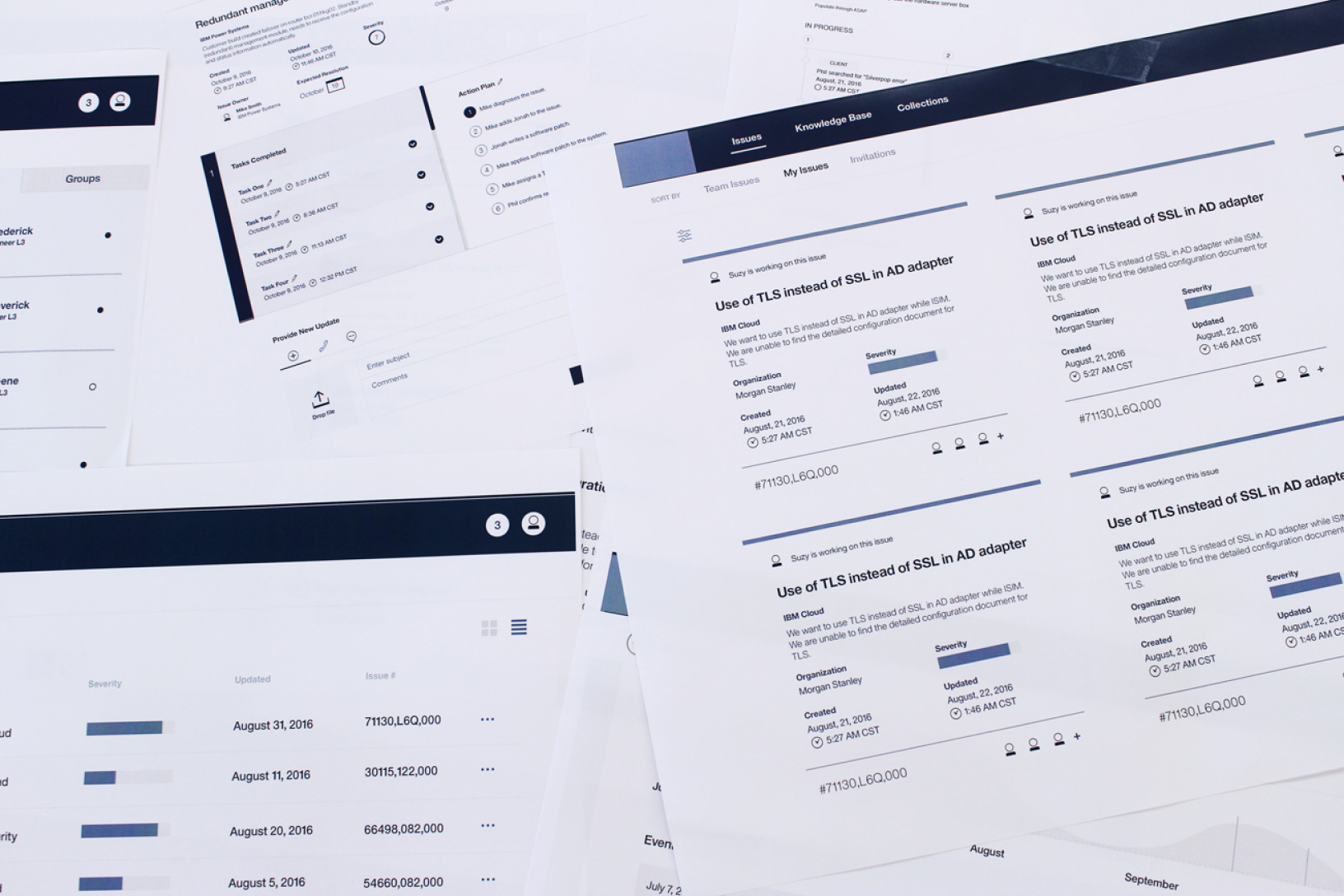
Transparency
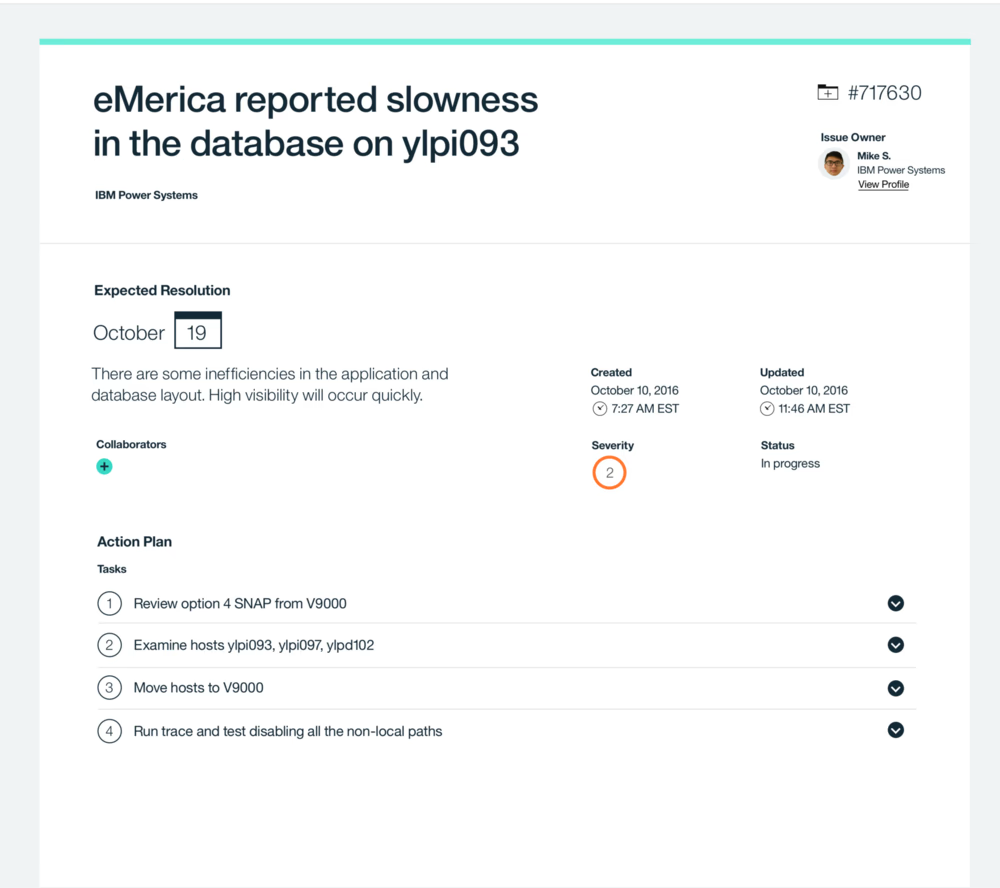
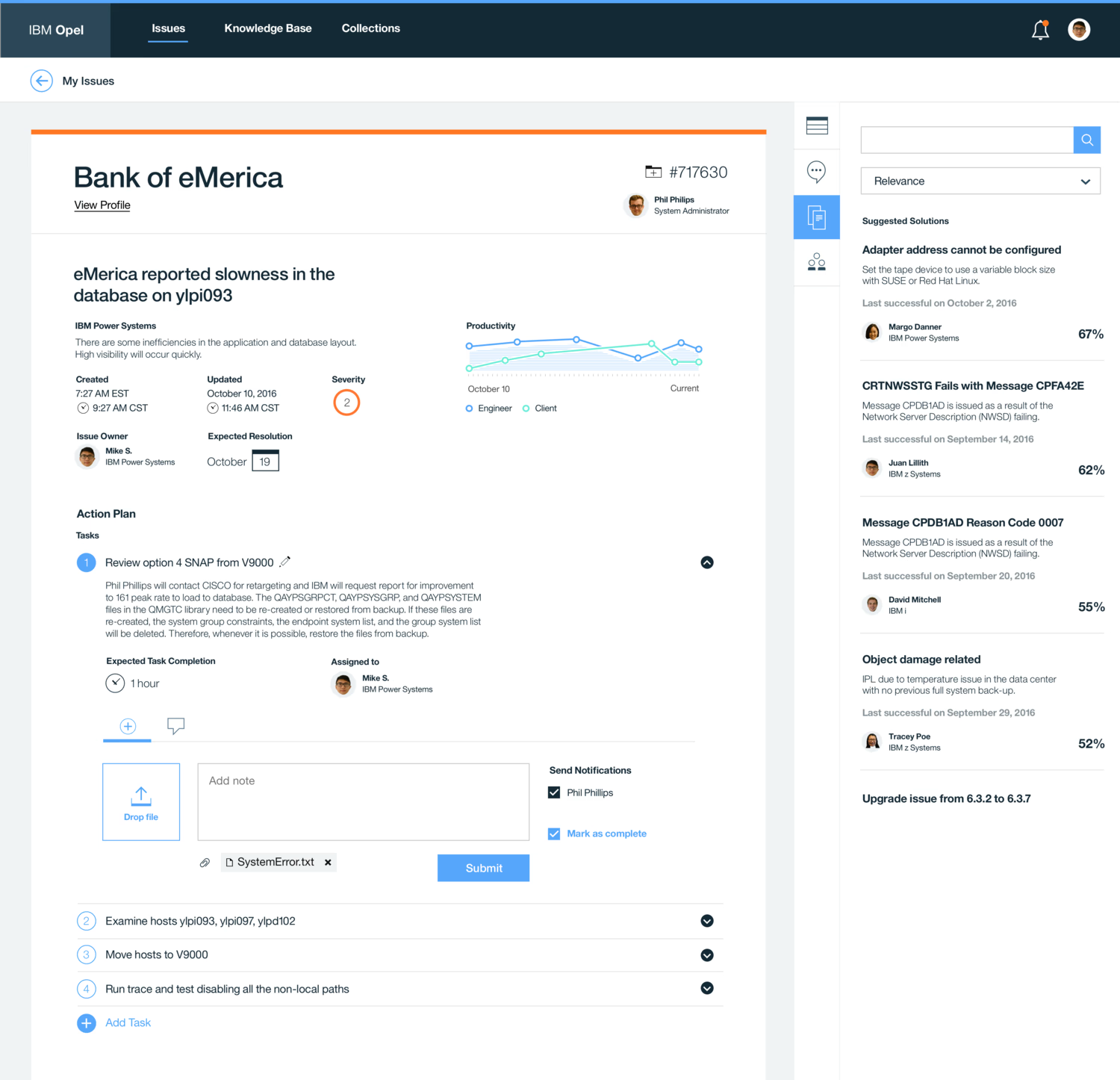
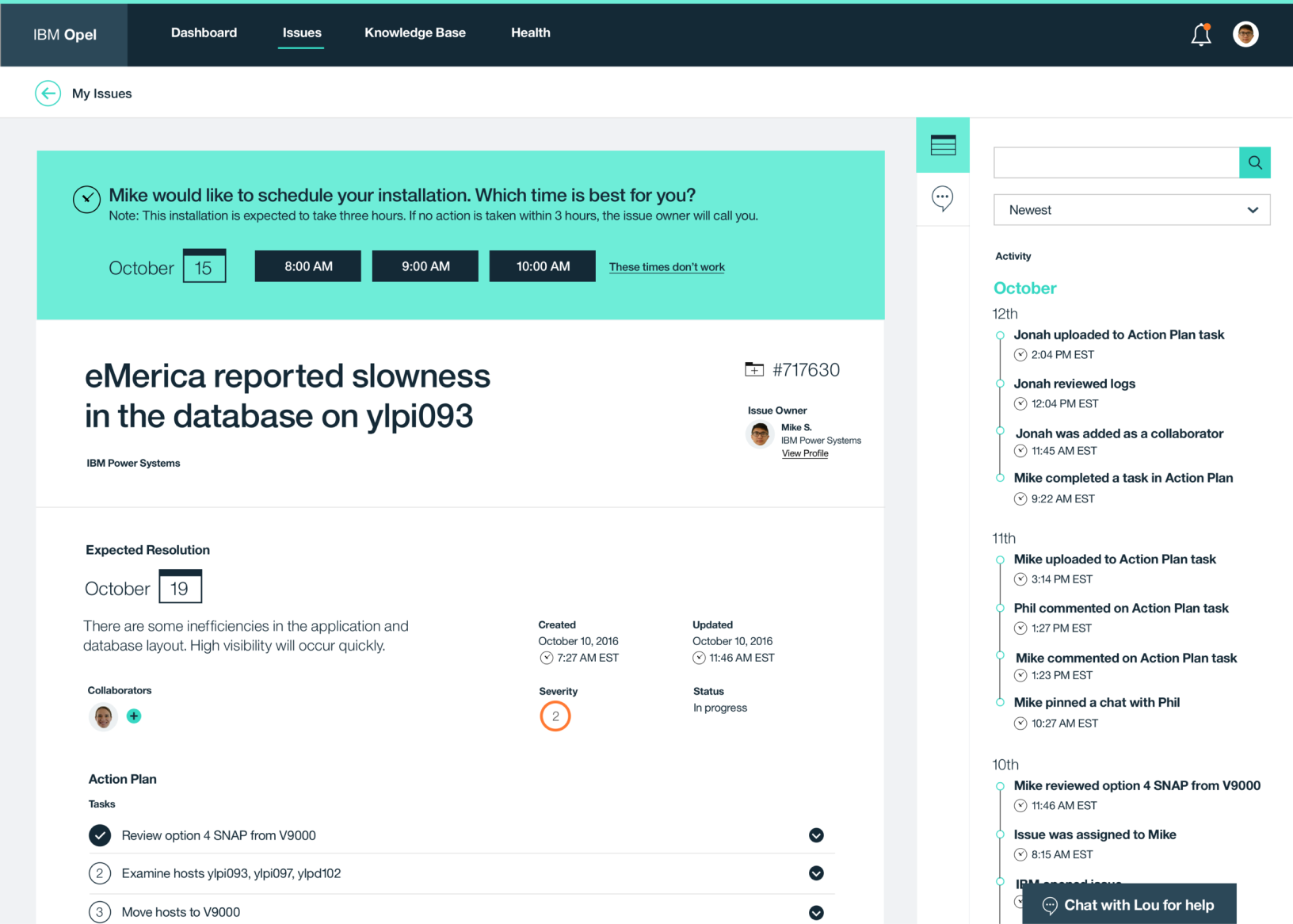
One of the biggest pain points for our clients was feeling like they had no visibility into the status of their support tickets and being unable to take any action. Our solution addresses this by providing transparency into ticket statuses, showing who is working on the issue, and offering estimates for resolution times. We wanted to instill confidence and trust in our clients by assuring them that their issues were being handled by the right people, while also giving them a direct line of communication with the agent managing their problem.
Proactive support
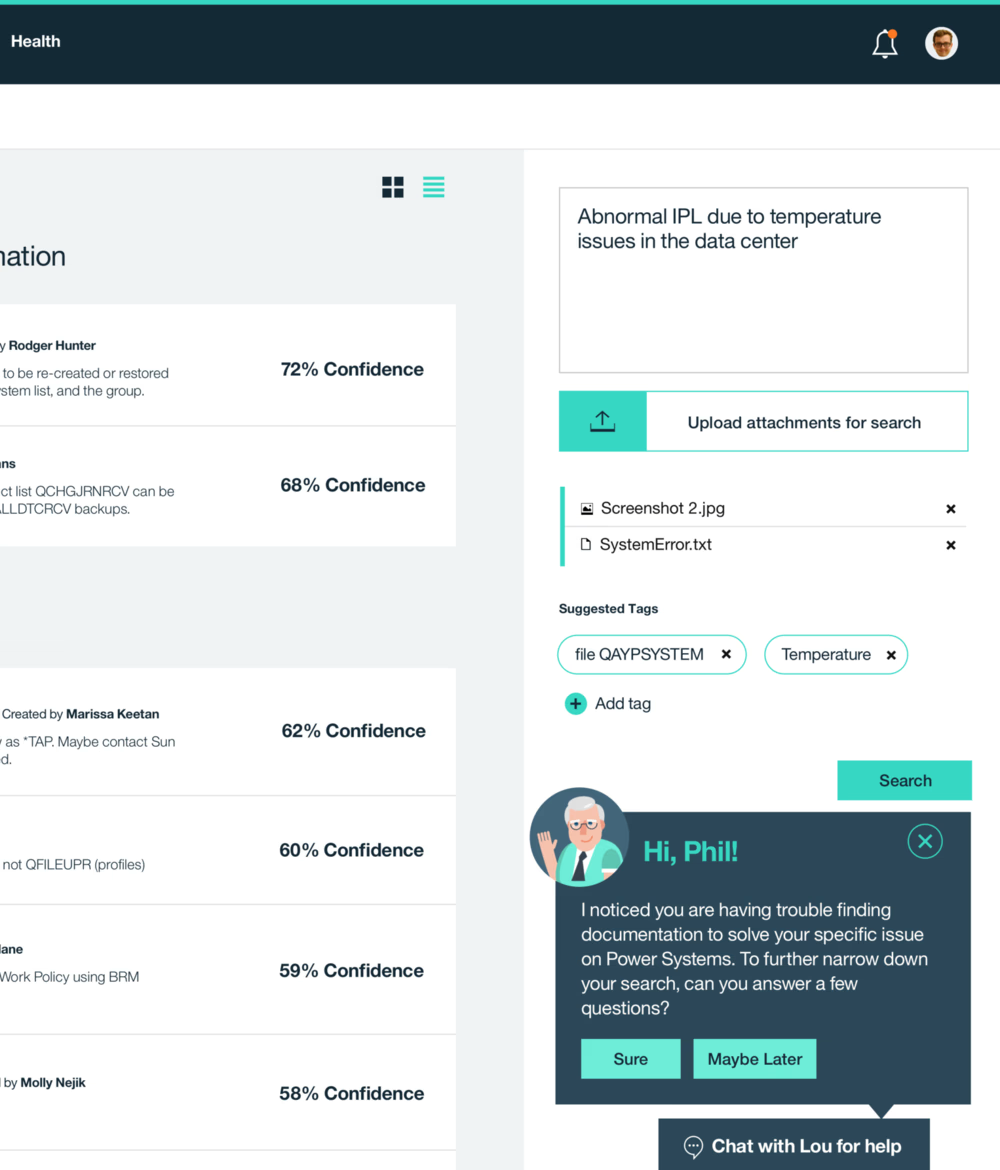
By leveraging IBM’s artificial intelligence technology, we also sought to bring support to our clients in a more proactive way through a chat bot — routing them to the appropriate support engineer or surfacing solutions based on their behavior and history.
Storing info for reuse
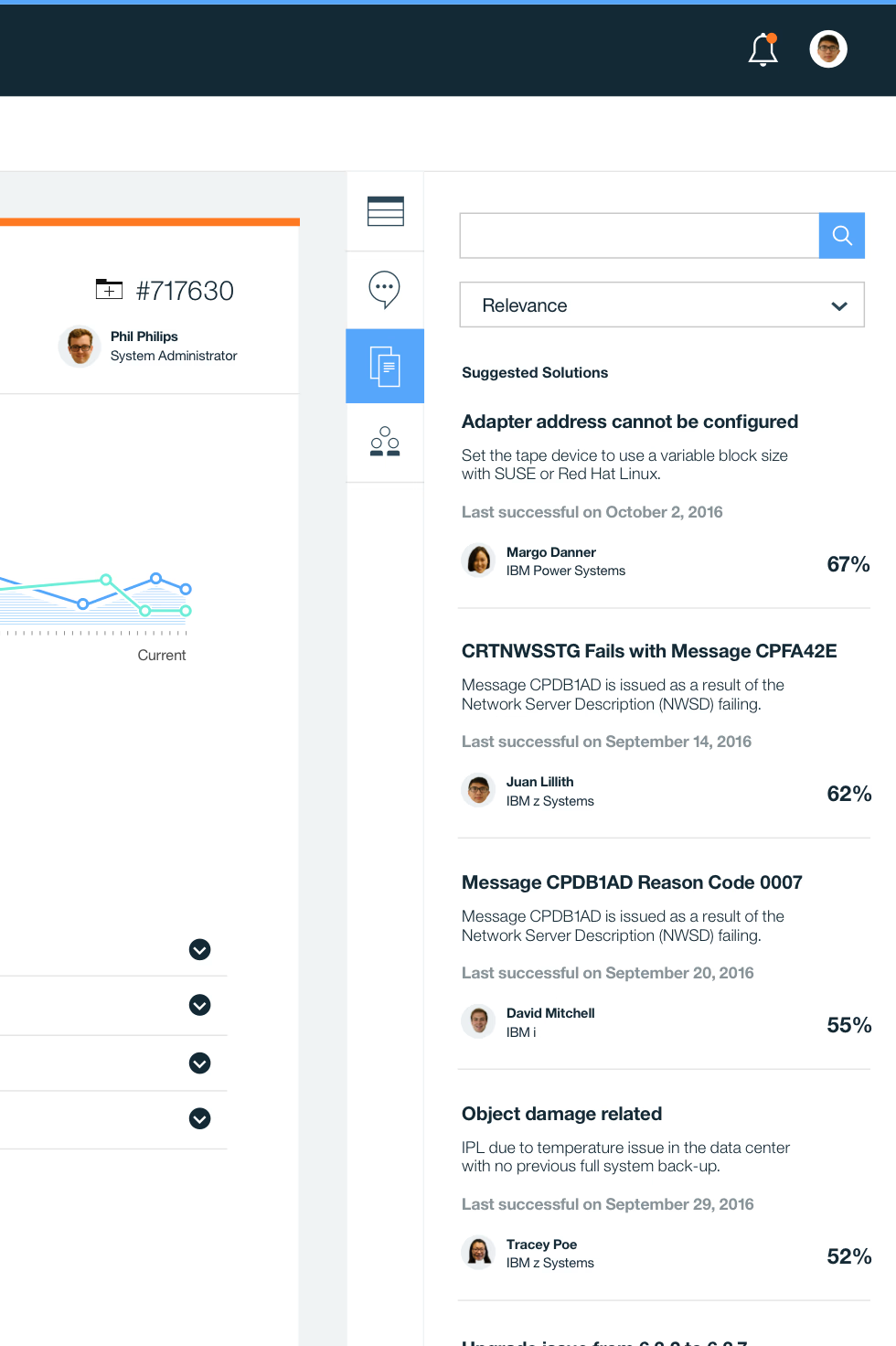
A searchable, concise, and reliable knowledge base was essential to ensure support efficiency for both clients and support engineers. To achieve this, we made it easy for support engineers to store and reuse solutions to previously resolved issues.
Enabling collaboration
For our support engineers, collaboration and communication were critical for resolving issues effectively. We designed a system that fostered collaboration, enabling engineers to easily work together on tickets and fully understand problems from the get-go.
IMPACT
Work was presented to executive team and Vice President of Support Transformation, Training, and Globalization at IBM headquarters. This conversation was critical in influencing the following events.
IBM spun up a new team and invested resources in UX, engineering, and product management to transform their support experience and bring the vision we pitched to life.
IBM invested in a partnership with Salesforce to utilize their tooling to support IBM’s support transformation.
IBM deprecated many outdated legacy support channels and tooling.